


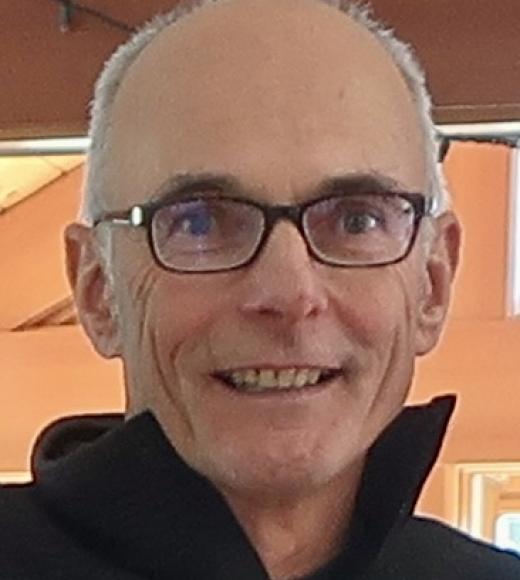
John Largier, Ph.D.
John Largier
University of California, Davis – Department of Environmental Science and Policy
Professor, Bodega Marine Laboratory
Bodega Marine Laboratory
P.O. Box 247
Bodega Bay , CA 94923
- About
B.S. (Applied Mathematics, Physics) University of Cape Town, 1981
B.S. Hons. (Applied Mathematics) University of Cape Town, 1983
Ph.D. (Oceanography), University of Cape Town, 1987Biography
John Largier is Professor of Coastal Oceanography at the University of California Davis (UCD), resident at Bodega Marine Laboratory. Prior to 2004, he was Research Oceanographer at Scripps Institution of Oceanography. He has also held positions at the University of Cape Town and the National Research Institute for Oceanology (CSIR) in South Africa.
His research, teaching and public service is motivated by contemporary environmental issues and centered on the role of transport in ocean, bay, nearshore and estuarine waters. His work has addressed transport of plankton, larvae, contaminants, pathogens, heat, salt, nutrients, dissolved oxygen, and sediment – and he places this work in the context of issues as diverse as marine reserves, fisheries, mariculture, beach pollution, wastewater discharge, wildlife health, desalination, river plumes, coastal power plants, kelp forests, wetlands, marine mining, coastal zone management and impacts of coastal development. At UCD he heads the 16-person Coastal Oceanography Group. Dr Largier is a leader in developing the field of “environmental oceanography” through linking traditional oceanographic study to critical environmental issues.
Dr Largier serves on the Science Advisory Team for the California Marine Life Protection Act (MLPA), the Governing Council for CeNCOOS (Central and Northern California Ocean Observing System), the Sanctuary Advisory Committee for the Gulf of Farallones, and several other advisory boards. He is president of the California Estuarine Research Society. In 2002-2004, Dr Largier played a significant role in advising the state on beach pollution and in the late 1990’s, he played a key role in developing the
knowledge foundation for the new coastal zone management policy in South Africa. He is an Aldo Leopold Leadership Fellow. Following undergraduate studies in Maths and Physics, he obtained a Ph.D. in Oceanography from the University of Cape Town (South Africa) in 1987.Also see BOON: Bodega Ocean Observing Node
- Research
My research is in coastal oceanography and ecology, specifically field-based study of water motion and the associated transport of water-borne material. This includes oceanographic study of bays in upwelling regions (open and enclosed bays), small "west coast" estuaries characterized by arid summers, bar-built mouths and pulsed winter inflow, and nearshore circulation (e.g., outflow from rivers, shoaling internal tides, and wind/wave-driven flows). My interest in environmental and ecological issues include larval/juvenile dispersal, coastal water quality (e.g., beach pollution), and primary productivity (including harmful algal blooms). My long-term goal is to better understand coastal ocean systems – to obtain an integrative view of how the diverse components, processes, and scales fit together.
- Teaching
Courses Taught at BML/UCD
ESP 110 (4 units), Principles of Environmental Science
Application of physical and chemical principles, ecological concepts, and systems approach to policy analysis of atmospheric environments, freshwater and marine environments, land use, energy supplies and technology, and other resources.
ESP 152 (3 units), Coastal Oceanography
Oceanography of coastal waters (shelf, bay, river plume, near-shore, estuary). The focus is on transport patterns, how they are forced and what implications they have for ecological and environmental problems. The course has a west-coast bias, and will use field-based learning in addition to lectures and assignments. This experience will be of interest to students in oceanography, ecology, environmental engineering, geology and hydrology.
BIS 124 (3 units), Coastal Marine Research (Instructors: John Largier and Tessa Hill)
Independent student research on topics related to the accompanying BML summer session courses. Students will select one instructor to be their primary mentor, but integrative topics that draw on the expertise of several BML faculty members will be encouraged.
- Publications
1986
Largier, J. L., 1986. Structure and mixing in the Palmiet Estuary, South Africa. South African Journal of Marine Science, 4, 139-152.
1987
Largier, J. L. and V. P. Swart, 1987. East-west variation in thermocline breakdown on the Agulhas Bank. In: The Benguela and Comparable Ecosystems. A. I. L. Payne, J. A. Gulland and K. H. Brink (editors). South African Journal of Marine Science, 5, 263-272.
Carter, R. A., H. F. McMurray and J. L. Largier, 1987. Thermocline characteristics and phytoplankton dynamics in Agulhas Bank waters.In: The Benguela and Comparable Ecosystems. A. I. L. Payne, J. A. Gulland and K. H. Brink (editors). South African Journal of Marine Science, 5, 327-336.
Swart, V. P. and J. L. Largier, 1987. Thermal structure of Agulhas Bank waters. In: The Benguela and Comparable Ecosystems. A. I. L. Payne, J. A. Gulland and K. H. Brink (editors). South African Journal of Marine Science, 5, 243-254.
1988
Grundlingh, M. L. and J. L. Largier, 1988. Fisiese oseanografie in Valsbaai: 'n oorsig. (Physical oceanography in False Bay: a review). S.A. Tydskrif vir Natuurwetenskap en Tegnologie, 7(3), 133-143.
1989
Chapman, P. and J. L. Largier, 1989. On the origin of Agulhas Bank bottom water. South African Journal of Science, 85, 515-519.
Largier, J. L., 1989.The diurnal mixed layer in lakes and oceans. South African Journal of Aquatic Science, 15(1), 28-49.
1990
Magnell, B. A., N. A. Bray, C. D. Winant, C. L. Greengrove, J. L. Largier, F. Borchardt, R. L. Bernstein and C. E. Dorman, 1990.Convergent shelf flow at Cape Mendocino. Oceanography, 3(1), 4-11.
Grundlingh, M. L. and J. L. Largier, 1990.Physical oceanography in False Bay: a review. Transactions of the Royal Society of South Africa, 47(4/5), 387-400.
Slinger, J. H. and J. L. Largier, 1990. The evolution of thermohaline structure in a closed estuary. South African Journal of Aquatic Science, 16(1/2), 60-77.
Largier, J. L., 1990.Linear prediction of interfacial tides on corrugated continental shelves. In: Stratified Flows. E. J. List, and G. H. Jirka (editors). ASCE, New York, pp. 921-930.
Swart, V. P. and J. L. Largier, 1990.An advectively sustained thermocline on the Agulhas Bank. In: Stratified Flows. E. J. List, and G. H. Jirka (editors). ASCE, New York, pp. 931-940.
Largier, J. L., 1990.Deep surface mixed layers on the continental shelf. Continental Shelf Research, 10(8), 759-776.
1991
Largier, J. L. and S. Taljaard, 1991.The dynamics of tidal intrusion, retention and removal of seawater in a bar-built estuary. Estuarine, Coastal and Shelf Science, 33, 325-338.
Largier, J. L. and J. H. Slinger, 1991.Circulation in highly stratified southern African estuaries. South African Journal of Aquatic Science, 17(1/2), 103-115.
1992
Largier, J. L., J. H. Slinger and S. Taljaard, 1992.The stratified hydrodynamics of the Palmiet - a prototypical bar-built estuary. In: Dynamics and Exchanges in Estuaries and the Coastal Zone. Prandle (editor), AGU, Washington DC, 135-153.
Largier, J. L., 1992, Tidal intrusion fronts. Estuaries, 15(1), 26-39.
Largier, J. L., P. Chapman, W. T. Peterson, and V. P. Swart, 1992.The western Agulhas Bank: circulation, stratification and ecology. In: Benguela Trophic Functioning. A.I.L. Payne, K.H.Brink, K.H.Mann and R.Hillborn (editors). South African Journal of Marine Science, 12, 319-339.
Peterson, W. T., L. Hutchings, J. Huggett and J. L. Largier, 1992.Anchovy spawning in relation to the biomass and the replenishment rate of their copepod prey on the western Agulhas Bank. In: Benguela Trophic Functioning. A.I.L. Payne, K.H.Brink, K.H.Mann and R.Hillborn (editors). South African Journal of Marine Science, 12, 487-500.
1993
Largier, J. L., 1993.Estuarine fronts: How important are they? In: Estuarine Fronts – Hydrodynamics, Sediment Dynamics and Ecology. J.L. Largier (editor). Estuaries, 16(1), 1-11.
Largier, J. L., B. A. Magnell and C. D. Winant, 1993.Subtidal circulation over the northern California shelf. Journal of Geophysical Research, 98(C10), 18147-18179.
Washburn, L., M. Swenson, J. L. Largier, M. Kosro and S. Ramp, 1993.An anticyclonic eddy in the coastal transition zone off northern California. Science, 261, 1560-1564.
1994
Botsford, L. W., C. L. Moloney, A. M. Hastings, J. L. Largier, T. M. Powell, K. Higgins and J. F. Quinn, 1994.The influence of spatially and temporally varying oceanographic conditions on meroplanktonic metapopulations. Deep-Sea Research II, 41(1), 107-145.
Largier, J. L., 1994. The internal tide over the shelf inshore of Cape Point Valley, South Africa. Journal of Geophysical Research, 99(C5), 10023-10034.
Moloney, C., L. W. Botsford and J. L. Largier, 1994.Development, survival and timing of metamorphosis of planktonic larvae in a variable environment: the Dungeness crab as an example. Marine Ecology Progress Series, 113, 61-79.
Del Bene, J. V., G. Jirka and J. Largier, 1994. Ocean brine disposal. Desalination, 97, 365-372.
1995
Slinger, J. H., S. Taljaard and J. L. Largier, 1995.Changes in estuarine water quality in response to a freshwater flow event. In: Changes in Fluxes in Estuaries: Implications from Science to Management, K. R. Dyer and R. J. Orth (editors), Olsen & Olsen, Denmark, 74-81.
Wing, S. R., J. L. Largier, L. W. Botsford and J. F. Quinn, 1995.Settlement and transport of benthic invertebrates in an intermittent upwelling region. Limnology and Oceanography, 40(2), 316-329.
Smith, J. A. and J. L. Largier, 1995.Observations of nearshore circulation: rip currents. Journal of Geophysical Research, 100 (C6), 10967-10975.
Wing, S. R., L. W. Botsford, J. L. Largier and L. E. Morgan, 1995.Spatial variability in the settlement of benthic invertebrates in a northern California upwelling system.Marine Ecology Progress Series, 128, 199-211.
1996
George, R. A. and J. L. Largier, 1996.Fine-scale drifters for coastal and estuarine studies: performance of a differential GPS tracking system. Journal of Atmospheric & Oceanic Technology, 13(6), 1322-1326.
Largier, J. L., 1996.Hydrodynamic exchange between San Francisco Bay and the ocean: the role of ocean circulation and stratification. In: San Francisco Bay: The Ecosystem. J.T.Hollibaugh (editor). Pacific Division AAAS, 69-104.
Hearn, C. J., J. L. Largier, S. V. Smith, J. Plant and J. Rooney, 1996.Effects of changing bathymetry on the summer buoyancy dynamics of a shallow mediterranean estuary: Tomales Bay, California. In: Buoyancy Effects on Coastal and Estuarine Dynamics. D. G. Aubrey and C. T. Friederichs (editors). Coastal and Estuarine Studies, vol. 53, 243-253.
Chadwick, D. B., J. L. Largier and R. T. Cheng, 1996.The role of thermal stratification in tidal exchange at the mouth of San Diego Bay. In: Buoyancy Effects on Coastal and Estuarine Dynamics. D. G. Aubrey and C. T. Friederichs (editors). Coastal and Estuarine Studies, vol. 53, 155-174.
Largier, J. L., C. J. Hearn and D. B. Chadwick, 1996.Density structures in low-inflow "estuaries". In: Buoyancy Effects on Coastal and Estuarine Dynamics. D. G. Aubrey and C. T. Friederichs (editors). Coastal and Estuarine Studies, vol. 53, 227-241.
1997
Jay, D. A., R. J. Uncles, J. L. Largier, W. R. Geyer, J. Vallino and W. R. Boynton, 1997. A review of recent developments in estuarine scalar flux estimation. Estuaries, 20(2), 262-280.
Graham, W. M. and J. L. Largier, 1997. Upwelling shadows as nearshore retention sites: the example of northern Monterey Bay. Continental Shelf Research, vol. 17(5), 509-532.
Hearn, C. J. and J. L. Largier, 1997. The summer buoyancy dynamics of a shallow mediterranean estuary and some effects of changing bathymetry: Tomales Bay, California. Estuarine Coastal and Shelf Science, 45, 497-506.
Largier, J. L., S. V. Smith and J. T. Hollibaugh, 1997. Seasonally hypersaline estuaries in mediterranean-climate regions. Estuarine Coastal and Shelf Science, 45, 789-797.
1998
Botsford, L. W., C. L. Moloney, J. L. Largier and A. Hastings, 1998. Metapopulation dynamics of meroplanktonic invertebrates: the Dungeness crab (Cancer magister) as an example. In: Proceedings of the North Pacific Symposium on Invertebrate Stock Assessment and Management. G. S. Jamieson and A. Campbell (editors). Can. Spec. Publ. Fish. Aquat. Sci., 125, 295-306.
Wing, S. R., L. W. Botsford, S. V. Ralston and J. L. Largier, 1998. Meroplanktonic distribution and circulation in a coastal retention zone of the northern California upwelling system. Limnology and Oceanography, 43(7), 1710-1721.
Schumann, E., J. Largier and J. Slinger, 1998. Estuarine hydrodynamics. In: Estuaries of South Africa, B. R. Allanson and D. Baird (Eds.). Cambridge University Press, 27-52.
Wing, S. R., J. L. Largier and L. W. Botsford, 1998. Coastal retention and longshore displacement of meroplankton near capes in eastern boundary currents: examples from the California Current. In: Benguela Dynamics: Impacts of Variability on Shelf-Sea Environments and their Living Resources. S. C. Pillar, C. L. Moloney, A. I. L. Payne and F. A. Shillington (editors). South African Journal of Marine Science, 19, 119-127.
Botsford, L. W., S. R. Wing and J. L. Largier, 1998. Population dynamics and management implications of larval dispersal. In: Benguela Dynamics: Impacts of Variability on Shelf-Sea Environments and their Living Resources. S. C. Pillar, C. L. Moloney, A. I. L. Payne and F. A. Shillington (editors). South African Journal of Marine Science, 19, 131-142.
1999
Rennie, S. E., J. L. Largier and S. J. Lentz, 1999. Observations of a pulsed buoyancy current downstream of Chesapeake Bay. Journal of Geophysical Research, 104(C8), 18227-18240.
Chadwick, D. B. and J. L. Largier, 1999. The influence of tidal range on the exchange between San Diego Bay and the ocean. Journal of Geophysical Research, 104(C12), 29885-29900.
Chadwick, D. B. and J. L. Largier, 1999. Tidal exchange at the bay-ocean boundary. Journal of Geophysical Research, 104 (C12), 29901-29919.
Monteiro, P. M. S. and J. L. Largier, 1999. Thermal stratification in Saldanha Bay (South Africa) and subtidal, density-driven exchange with the coastal waters of the Benguela upwelling system. Estuarine Coastal and Shelf Science, 49 (6), 877-890.
2000
Shanks, A. L., J. L. Largier, L. Brink, J. Brubaker, R. Hooff, 2000. Demonstration of the onshore transport of larval invertebrates by the shoreward movement of an upwelling front. Limnology and Oceanography, 45 (1), 230-236.
Largier, J. L., C. Attwood and J.-L. Harcourt-Baldwin, 2000. The hydrographic character of Knysna Estuary. Transactions of the Royal Society of South Africa 55(2), 107-122.
Penven, P., C. Roy, A. Colin de Verdiere and J. Largier, 2000. Simulation of a coastal jet retention process using a barotropic model. Oceanologica Acta, 23(5), 615-634.
2001
Largier, J. and A. Boyd, 2001. Drifter observations of surface water transport in the Benguela Current during winter 1999. South African Journal of Science, 97(5/6), 223-229.
Cudaback, C. N. and J. L. Largier, 2001. The cross-shelf structure of wind- and buoyancy-driven circulation over the North Carolina inner shelf. Continental Shelf Research 21(15), 1649-1668.
D’Sa, E. J., S. E. Lohrenz, J. H. Churchill, V. J. Asper, J. L. Largier and A. J. Williams III, 2001. Chloropigment distribution and transport on the inner shelf off Duck, North Carolina. Journal of Geophysical Research, 106(C6), 11581-11596.
2002
Largier, J. L., 2002. Linking oceanography and nearshore ecology: perspectives and challenges. In: The Oceanography and Ecology of the Nearshore and Bays in Chile, J. C. Castilla and J. L. Largier (editors), Ediciones Universidad Católica de Chile, Santiago, 207-239.
Castilla, J. C., N. A. Lagos, R. Guinez, and J. L. Largier, 2002. Embayments and nearshore retention of plankton: the Antofogasta Bay and other examples. In: The Oceanography and Ecology of the Nearshore and Bays in Chile, J. C. Castilla and J. L. Largier (editors), Ediciones Universidad Católica de Chile, Santiago, 179-203.
Shanks, A. L., J. Largier, L. Brink, J. Brubaker, R. Hooff, 2002. Observations on the distribution of meroplankton during a downwelling event and associated intrusion of the Chesapeake Bay estuarine plume. Journal of Plankton Research 24(4), 391-416.
2003
Largier, J. L., 2003. Considerations in estimating larval dispersal distances from oceanographic data. Ecological Applications 13(1) Supplement, S71-S89.
Gaines, S. D., B. Gaylord and J. L. Largier, 2003. Avoiding current oversights in marine reserve design. Ecological Applications 13(1), S32-S46.
Carr, M. H., J. E. Neigel, J. A. Estes, S. Andelman, R. R. Warner and J. L. Largier, 2003. Comparing marine and terrestrial ecosystems: implications for the design of coastal marine reserves. Ecological Applications 13(1), S90-S107.
Kaplan, D. M., J. Largier, S. Navarrete, R. Guinez, J. C. Castilla, 2003. Large diurnal temperature fluctuations in the nearshore water column. Estuarine Coastal and Shelf Science, 57, 385-398.
Wieters, E. A., D. M. Kaplan, S. A. Navarrete, A. Sotomayor, J. Largier, K. J. Nielsen, F. Veliz, 2003. Alongshore and temporal variability in chlorophyll a concentrations in Chilean nearshore waters. Marine Ecology Progress Series, 249, 93-105.
Shanks, A. L., J. Largier, J. Brubaker, 2003. Observations on the distribution of meroplankton during an upwelling event. Journal of Plankton Research, 25(6), 645-667.
Botsford, L. W., C. A. Lawrence, E. P. Dever, A. Hastings, and J. Largier, 2003. Wind strength and biological productivity in upwelling systems: an idealized study. Fisheries Oceanography, 12:245-259.
Kim, J. H., S. B. Grant, C. D. McGee, B. F. Sanders J. L. Largier, 2003. Locating sources of surf zone pollution: a mass budget analysis of fecal indicator bacteria at Huntington Beach. Environmental Science and Technology, 38:2626-2636.
2004
Largier, J., 2004. The importance of retention zones in the dispersal of larvae. American Fisheries Society Symposium, 45:105-122.
2005
Roughan, M., E. J. Terrill, J. L. Largier, M. P. Otero, 2005. Observations of divergence and upwelling around Pt Loma, California. Journal of Geophysical Research, 110, C04011, doi:10.1029/2004JC002662.
Kaplan, D. M., J. L. Largier, L. W. Botsford, 2005. HF radar observations of surface circulation off Bodega Bay (northern California, USA). Journal of Geophysical Research, 110, C10020, doi:10.1029/2005JC002959.
Roughan, M., A. J. Mace, J. L. Largier, S. G. Morgan, J. L. Fisher, M. L. Carter, 2005. Sub-surface recirculation and larval retention in the lee of a small headland: a variation on the upwelling shadow theme. Journal of Geophysical Research, 110, C10027, doi:10.1029/2005JC002898.
2006
Lentz, S. J. and J. Largier, 2006. The influence of wind forcing on the Chesapeake Bay buoyant coastal current. Journal of Physical Oceanography, 36(7):1305-1316.
Largier, J. L., C. A. Lawrence, M. Roughan, D. M. Kaplan, E. P. Dever, C. E. Dorman, R. M. Kudela, S. M. Bollens, F. P. Wilkerson, R. C. Dugdale, L. W. Botsford, N. Garfield, B. Kuebel-Cervantes, D. Koracin, 2006. WEST: A northern California study of the role of wind-driven transport in the productivity of coastal plankton communities. Deep Sea Research II, 53(25-26):2833-2849.
Dorman, C. E., E. P. Dever, J. Largier, D. Koracin, 2006. Buoy measured wind, wind stress and curl of the wind stress over the shelf off Bodega Bay, California. Deep Sea Research II, 53(25-26):2850-2864.
Dever, E. P., C. E. Dorman, J. L. Largier, 2006. Surface boundary layer variability off northern California, USA during upwelling. Deep Sea Research II, 53(25-26):2887-2905.
Kaplan, D. M. and J. L. Largier, 2006. HF-radar-derived origin and destination of surface waters off Bodega Bay, California. Deep Sea Research II, 53(25-26):2906-2930.
Roughan, M., N. Garfield, J. Largier, E. Dever, C. Dorman, D. Peterson, J. Dorman, 2006. Transport and retention in an upwelling region: The role of across-shelf structure. Deep Sea Research II, 53(25-26):2931-2955.
Vander Woude A. J., J. L. Largier, R. M. Kudela, 2006. Nearshore retention of upwelled waters north and south of Point Reyes (northern California) – patterns of surface temperature and chlorophyll observed in CoOP WEST. Deep Sea Research II, 53(25-26):2985-2998.
Botsford, L. W., C. A. Lawrence, E. P. Dever, A. Hastings, J. Largier, 2006. Effects of variable winds on biological productivity on continental shelves in coastal upwelling systems. Deep Sea Research II, 53(25-26):3116-3140.
Narvaez, D. A., S. A. Navarrete, J. Largier, C. A. Vargas, 2006. Onshore advection of warm water, larval invertebrate settlement, and relaxation of upwelling off central Chile. Marine Ecology Progress Series, 309:159-173.
Hamilton, P., M. A. Noble, J. Largier, L. K. Rosenfeld, G. Robertson, 2006. Cross-shelf subtidal variability in San Pedro Bay during summer 2001. Continental Shelf Research, 26(6):681-702.
2007
Clarke, L. B., D. Ackerman, J. Largier, 2007. Dye dispersion in the surf zone: measurements and simple models. Continental Shelf Research, 27(5):650-669.
Pinones, A., J. C. Castilla, R. Guinez, J. L. Largier, 2007. Nearshore surface temperatures in Antofagasta Bay (Chile) and adjacent upwelling centers. Ciencias Marinas, 33(1):37-48.
Gaylord, B., J. H. Rosman, D. Reed, J. R. Koseff, J. Fram , S. MacIntyre, K. Arkema, C. McDonald, M. A. Brzezinski, J. L. Largier, S. G. Monismith, P. T. Raimondi, B. Mardian, 2007. Spatial patterns of flow and their modification within and around a giant kelp forest. Limnology and Oceanography, 52(5):1838-1852.
Gawarkiewicz, G., S. Monismith, J. Largier, 2007. Observing larval transport processes affecting population connectivity: progress and challenges. Oceanography, 20(3):40-53.
2008
Kudela, R. M., N. S. Banas, J. A. Barth, E. R. Frame, D. Jay, J. L. Largier, E. J. Lessard, T. D. Peterson, A. J. Vander Woude, 2008. New Insights into the Controls and Mechanisms of Plankton Productivity in Coastal Upwelling Waters of the Northern California Current System. Oceanography, 21(4):46-59.
2009
Botsford, L. W., D. R. Brumbaugh, C. Grimes, J. B. Kellner, J. Largier, M. R. O’Farrell, S. Ralston, E. Soulanille, V. Wespestad, 2009. Connectivity, sustainability, and yield: bridging the gap between conventional fisheries management and marine protected areas. Reviews in Fish Biology and Fisheries, 19(1):69-95, DOI 10.1007/s11160-008-9092-z.
Rasmussen, L. L., B. D. Cornuelle, L. A. Levin, J. L. Largier, E. Di Lorenzo, 2009. Effects of small-scale features and local wind forcing on tracer dispersion and estimates of population connectivity in a regional scale circulation model. Journal of Geophysical Research, 114, C01012, doi:10.1029/2008JC004777.
Shapiro, K., J. Largier, J. A. K. Mazet, W. Bernt, J. R. Ell, A. C. Melli, and P. A. Conrad, 2009. Surface properties of Toxoplasma gondii oocysts and surrogate microspheres. Journal of Applied and Environmental Microbiology, 75(4), 1185-1191.
Kimbro, D. L., J. Largier, E. D. Grosholz, 2009. Coastal oceanographic processes influence the growth and size of a key estuarine species, the Olympia oyster. Limnology and Oceanography, 54(5), 1425-1437.
Behrens, D. K., F. A. Bombardelli, J. L. Largier, E. Twohy, 2009. Characterization of time and spatial scales of a migrating rivermouth. Geophysical Research Letters, 36, L09402, doi:10.1029/2008GL037025.
Tapia, F.J., S. A. Navarrete, M. Castillo, B. A. Menge, J. C. Castilla, J. Largier, E. A. Wieters, B. L. Broitman, J.A. Barth, 2009. Thermal indices of upwelling effects on inner-shelf habitats. Progress in Oceanography (in press).
Morgan, S. G., J. L. Fisher, S. H. Miller, S. T. McAfee, J. L. Largier, 2009. Nearshore larval retention in a region of strong upwelling and recruitment limitation. Ecology (in press).
Noble, M., B. Jones, P. Hamilton, J. Xu, G. Robertson, L. Rosenfeld, J. Largier, 2008. Cross-shelf transport by shoaling internal tides in San Pedro Bay, CA. Continental Shelf Research, 29(15):1768-1785.
Largier, J. L., 2009. Low-inflow estuaries: hypersaline, inverse and thermal scenarios. In: Contemporary Issues in Estuarine Physics, A. Valle-Levinson (editor), Cambridge University Press, Cambridge (in press).
Kaplan, D. M., C. Halle, J. Paduan and J. L. Largier, 2009. Surface currents during anomalous upwelling seasons off central California. Journal of Geophysical Research, 114, doi:10.1029/2009JC005382 (in press).
White, J. W., L. W. Botsford, A. Hastings, J. L. Largier, 2009. Population persistence in marine reserve networks: incorporating spatial heterogeneities in larval dispersal. Marine Ecology Progress Series (in press).
Shapiro, K., J. A. K. Mazet, A. Schriewer, S. Wertz, H. Fritz, W. A. Miller, J. Largier, P. A. Conrad, 2009. Detection of Toxoplasma gondii oocysts and surrogate microspheres in water using ultrafiltration and capsule filtration. Journal Water Research (in press).
Garcia-Reyes, M. and J. Largier, 2009. Trends in seasonal upwelling over the central and northern California shelf. Journal of Geophysical Research, (in press).
- Lab
The Coastal Oceanography Group (COG)
The UC Davis Coastal Oceanography Group is directed at the emerging discipline of "environmental oceanography", in which oceanographic study, analysis and insight is directed at resolving environmental issues that are critical to the sustainable interaction between human society and our earthly home.
Graduate Students
Dane Behrens I am a PhD student in the Department of Civil and Environmental Engineering at UC Davis. Professor Largier is my co-advisor, along with Dr. Fabian Bombardelli from the Department of Civil and Environmental Engineering. My work focuses on the interactions between rivers and the ocean, more specifically, the mouths of rivers and the complex estuaries that they protect. The behaviors of river mouths are affected by a number of interrelated factors, including waves, tides, river flow, and sediment transport (among many others). These are incredibly dynamic systems, and a multitude of questions remain about the various aspects of their behavior. My M.S. dealt with the mouth closure and morphological behavior of the Russian River, in Northern California. I developed the early form of a simple model which predicts inlet closure events based on wave forecasting. My PhD work will focus on three issues: The socioeconomics and behaviors of unstable rivers in the Pacific Rim, the stratification of estuaries with different closure patterns,and the effects of historical land-use and management changes on estuarine inlet stability in California.
Marisol Garcia Reyes I recently received my Ph.D. in the Atmospheric Science Group at UC Davis, working at BML. My area of study is coastal upwelling, and my focus is the interannual and intraseasonal variability of the forcing and response of upwelling (wind and sea surface temperature) in California, particularly Bodega Bay.
Rachel Fontana I am a Ph.D. student in the Graduate Group in Ecology. My general research interests focus on linking ecological processes with coastal physical oceanographic dynamics. For my dissertation research, I am focusing on small-scale oceanographic features, known as fronts over the north-central California shelf. This region is known for its dynamic upwelling ecosystem and enhanced productivity at multiple trophic levels. I am investigating whether small-scale feature locations are predictable both spatially and temporally. Additionally, I am interested in whether high trophic level predators, such as marine mammal and seabirds utilize the persistent fronts as feeding areas.
Lauren Garske In the past, many people have subscribed to the idea that 'dilution is the solution to pollution' but the assumption that coastal marine environments are able to absorb our nonpoint source pollutants without impact remains largely unfounded. Spatial, temporal and economic constraints on sampling techniques and limited insight on where to most efficiently focus research efforts have been key reasons for the paucity of data. However, by understanding how pollutant-carrying waters (such as that from rivers and storm drains) are transported beyond the land-sea interface and into the nearshore environment, we can be more strategic with investigations by first identifying areas at greatest exposure risk. My dissertation research begins with a strong foundation in nearshore oceanography and subsequently aims to develop and validate a data-rich model using information on pollutant patterns and kelp forest communities in the northern Monterey Bay. A major goal of my work is to provide coastal resource managers with a predictive tool applicable to a variety of issues.
Kerry Nickols Although marine ecologists have developed ideas and theories surrounding the importance of recruitment on marine populations and communities, the dispersal stage of many marine organisms is still a black box. In order to understand larval ecology and connections between benthic organisms and their larval stage, we must develop a better understanding of the oceanographic connections between the nearshore and offshore. I am interested in the effects of topography on nearshore currents, as a potential mechanism for larval retention and transport. Specifically, I am studying the Coastal Boundary Layer, a region of attenuated flow due to the presence of the coastline and changes in bathymetry. My field work is concentrated in the inner inner inner shelf along the California coast, measuring water velocity as a function of distance from shore and depth. I am also working on a particle dispersion model, which will explore the effects of the Coastal Boundary Layer on larval dispersal.
Karen Shapiro Post Doc, For my PhD dissertation I am investigating how a protozoan parasite (Toxoplasma gondii) shed in the feces of cats is transported from land to sea where it infects sea otters. The specific question we are trying to address is whether wetland degradation along the California coast could have led to increased contamination of nearshore water with T. gondii. This parasite can also infect people who ingest water contaminated with the parasite, and we hope that understanding how T. gondii behaves in aquatic environments will help implement better water treatment and habitat conservation measures to prevent infection in both people and wildlife.
Dale Trockel I'm a PhD student in Applied Math. I study near shore mixing cased by the shoaling of internal waves. Internal waves are waves that form in a fluid between two layers of different densities. Just like waves you see on the surfaces, as these internal waves get close to shore, they steepen, break, and run up the the sloped bottom. This can bring cold water from the deep ocean up to the surface near shore affecting near shore mixing.Staff
Matt Robart, Staff Research Associate
David Dann Marine Technician, Research Assistant
Marcel Losekoot Programmer, Technician, BOON, Surface Current Monitoring
Deedee Shideler Webperson, Technician, BOON, Surface Current Monitoring Selected seminars presented by COG members:
- 14 Sept 2009, Will White: Spatially explicit estimates of pelagic larval mortality: models and data
- 21 Sept 2009, Karen Shapiro: California sea otters, cat feces, and estuarine wetlands: how coastal habitat degradation impacts the health of a threatened species
- 13 July 2009, John Largier: Whither the water? Exposure of nearshore environments to San Francisco Bay outflow
- 23 June 2009, John Largier: Circulation monitoring, Russian River Estuary Research Workshop, Monte Rio
- 22 June 2009, Karen Shapiro: California sea otters, cat feces, and estuarine wetlands: How coastal habitat degradation impacts the health of a threatened species, Center for Watershed Sciences, UC Davis (Michael Johnson Lab)
- 10 June 2009, Karen Shapiro: Transport of zoonotic pathogens from land to sea: Waterborne toxoplasmosis and wetland degradation in California sea otters, Ben Gurion University, Water Institute, Israel
- 18 May 2009, Chris Halle: High Frequency Radar Update Water Parcel Trajectories, Satellites And Radars, and Website Additions"
- 30 Mar 2009, Kerry Nichols: Coastal boundary layers in the field and in the flume
- 12 Jan 2009, Marisol Garcia-Reyes: Changes in the upwelling seasonality in California
- 14 April 2008, Silvia Piedracoba-Varela: Oceanographic studies of the Rias of Galicia
- Dec 2008, John Largier, Concepcion, Chile
- Oct 2008, John Largier, Dalhousie University, Canada
B.S. (Applied Mathematics, Physics) University of Cape Town, 1981
B.S. Hons. (Applied Mathematics) University of Cape Town, 1983
Ph.D. (Oceanography), University of Cape Town, 1987
Biography
John Largier is Professor of Coastal Oceanography at the University of California Davis (UCD), resident at Bodega Marine Laboratory. Prior to 2004, he was Research Oceanographer at Scripps Institution of Oceanography. He has also held positions at the University of Cape Town and the National Research Institute for Oceanology (CSIR) in South Africa.
His research, teaching and public service is motivated by contemporary environmental issues and centered on the role of transport in ocean, bay, nearshore and estuarine waters. His work has addressed transport of plankton, larvae, contaminants, pathogens, heat, salt, nutrients, dissolved oxygen, and sediment – and he places this work in the context of issues as diverse as marine reserves, fisheries, mariculture, beach pollution, wastewater discharge, wildlife health, desalination, river plumes, coastal power plants, kelp forests, wetlands, marine mining, coastal zone management and impacts of coastal development. At UCD he heads the 16-person Coastal Oceanography Group. Dr Largier is a leader in developing the field of “environmental oceanography” through linking traditional oceanographic study to critical environmental issues.
Dr Largier serves on the Science Advisory Team for the California Marine Life Protection Act (MLPA), the Governing Council for CeNCOOS (Central and Northern California Ocean Observing System), the Sanctuary Advisory Committee for the Gulf of Farallones, and several other advisory boards. He is president of the California Estuarine Research Society. In 2002-2004, Dr Largier played a significant role in advising the state on beach pollution and in the late 1990’s, he played a key role in developing the
knowledge foundation for the new coastal zone management policy in South Africa. He is an Aldo Leopold Leadership Fellow. Following undergraduate studies in Maths and Physics, he obtained a Ph.D. in Oceanography from the University of Cape Town (South Africa) in 1987.
Also see BOON: Bodega Ocean Observing Node


