


Position Title
1951–2018, In Memoriam
Distinguished Professor
- College of Biological Sciences
- Evolution and Ecology
 Spotlight on Dr. Susan Williams
BS, Biology, University of Michigan
MS, Biological Oceanography, University of Alaska
PhD, Botany and Marine Biology, University of Maryland
Research Interests
My research focuses on the ecology of nearshore marine ecosystems, particularly seagrass and seaweed beds and coral reefs. These ecosystems are highly productive and provide a number of ecosystem 'services' such as recycling of organic matter and providing habitat and food for numerous marine species including economically valuable ones. These ecosystems are found at the land-sea margin, a highly variable, stressful, and disturbed environment. Their component organisms are stressed from exposure to air and warming ocean waters and disturbed by anthropogenic activities including habitat destruction and invasions by non-native species. The ecosystems I study have protected status due to their value to humans, and I am committed to communicating research results to resource agencies and policymakers charged with their management (see Public Service, below). My focus on environmental stress and change has evolved from my career-long interest in how communities and ecosystems function, including how variation in resource availability influences resources acquisition and allocation and how species interactions (competition, herbivory) influence plant function and biogeochemical processes.
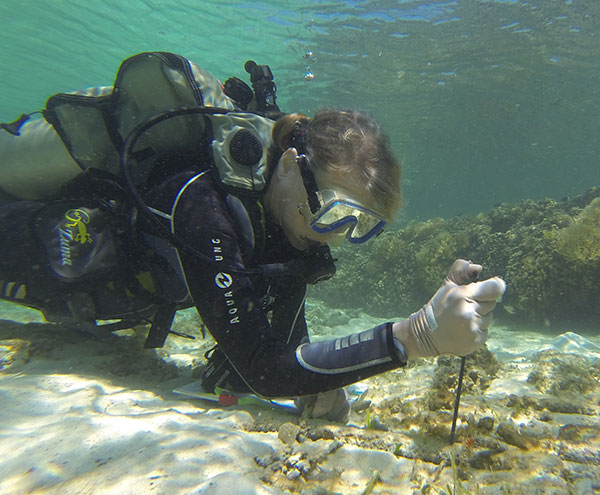
An experiment performed by UC Davis and Hasanuddin University scientists in the Indonesian Coral Triangle demonstrated one method of improving restoration outcomes. The results, published in the journal PNAS in November 2017, indicate that multiple seagrass species grown together are more successful and survive longer.
Ecology and conservation of seagrass and seaweed beds
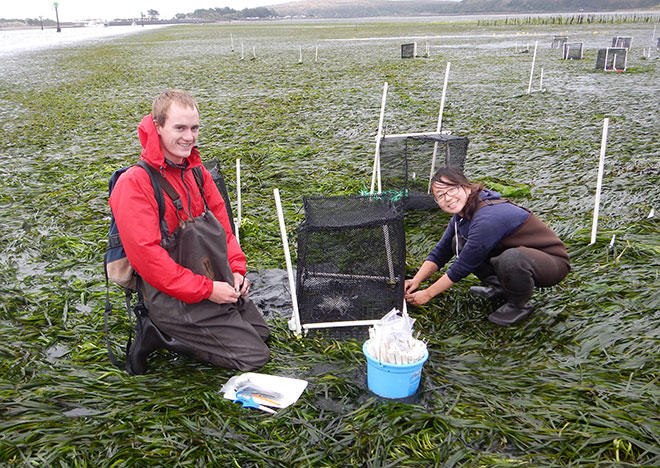
Seagrasses are protected under the US Clean Water Act and the loss of seagrass from deliberate causes must be mitigated. I found that the transplanting eelgrass (Zostera marina) to mitigate its loss has eroded the genetic diversity so important for its long-term adaptation to the rapid changes (ocean warming, sea level rise, eutrophication) occurring in its estuarine and nearshore habitats. More importantly, transplanted eelgrass populations with low levels of genetic diversity grow slower than populations with higher genetic diversity, even over the short time period mandated for evaluation of mitigation success. These and my previous results on eelgrass genetic diversity provided the basis for the National Marine Fisheries Service to modify eelgrass mitigation policy in southern California. Currently, Jay Stachowicz, Rick Grosberg and I are funded by the National Science Foundation to study the effects of eelgrass genetic diversity on eelgrass ecosystem functions (see publications listed above). See my publications (below) for examples:
- Reynolds et al. 2016
- Tomas et al. 2011
- Waycott et al. 2009
- Hughes et al. 2009
- Williams 2001
Ecology and management of marine invasive species
Marine invasive species are one of the top environmental concerns for the ocean. Research in my lab has focused on the ecological effects of the non-native Asian mussel (Musculista senhousia), the stinging anemone (Bunodeopsis sp.), and the 'killer' seaweed (Caulerpa taxifolia) on seagrasses in southern California and invasive sea slugs in northern California. Managing vectors that introduce non-native species is the most cost-effective way to prevent future damages. Preventing new invasions should be a consideration in making aquaculture and the aquarium trade environmentally sustainable.
- Williams et al. 2013
- Williams and Grosholz 2008
- Williams 2007
- Williams and Smith 2007
- Lodge et al. 2006
- Padilla and Williams 2004
Nearshore marine ecosystem function
Seaweed Biodiversity and Ecosystem Function
Ecosystem function, or the flow of energy and mass through organisms and communities, has been a major focus of my research throughout my career. For example, photosynthesis by seagrasses and seaweeds provides food and essential elements such as nitrogen in protein to animals in the food web. In a recent project funded by the National Science Foundation, Professor Matt Bracken and I evaluated the consequences of nonrandom biodiversity changes in intertidal seaweed assemblages on primary production and nutrient acquisition. Most studies to date have addressed the influence of random changes in biodiversity on community structure and function, yet we know that diversity changes in predictable, nonrandom ways in response to eutrophication, physical stress, and herbivory.
- Williams et al. 2013
- Bracken and Williams 2013
- Bracken et al. 2011
- Stewart et al. 2009
- Williams et al. 2009
Coral Reef Ecology
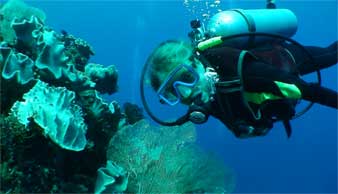 Throughout my career, I have studied tropical coral reefs and seagrass beds in the Caribbean and Pacific oceans. My newest research is based in the Spermonde Islands, Sulawesi, Indonesia, in collaboration with colleagues at Hasanuddin University and Mars Sustainable Solutions. Professor Rohani Ambo-Rappe and I have a seagrass restoration project funded by the USAID PEER program and NSF. To date 18 graduate students and five faculty and post-docs have traveled with me to collaborate in this project.
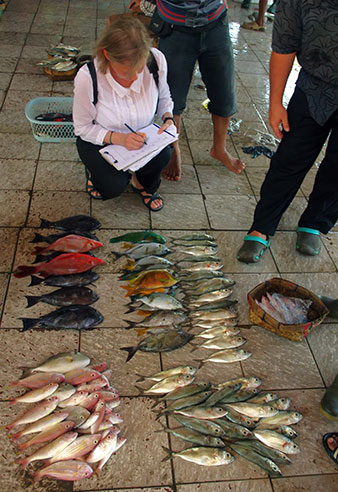
See us in:
- Williams, 2013. A new collaboration for Indonesia’s small islands. Frontiers in Ecology and the Environment 11:274-275.
- Williams, S.L., J. Abbott, G. Ha and R. Ambo-Rappe. 2014. Juvenile batfish hidden in seagrass. Coral Reefs 33:909. doi 10.1007/s00338-014-1194-6
This research complements my long-standing interest in how herbivory and nutrients interact to influence the primary production and nitrogen cycling by seagrasses and seaweeds.
See my article on recent field trip: Williams, 2013. A new collaboration for Indonesia’s small islands. Frontiers in Ecology and the Environment 11:274-275.
Interactive Effects of Herbivory and Stress on Seaweed Resource Acquisition, Allocation, and Fitness
This study was a collaborative NSF-sponsored project with Dr. Megan Dethier (Friday Harbor Laboratories, U. Washington). Using the high intertidal rockweed, Fucus gardneri, as a model, we have investigated how herbivory and stress interact to influence how seaweeds gain resources (carbon) through photosynthesis, how they allocate resources to key processes of growth, reproduction, herbivore-deterrent compounds (polyphenolics), and storage. Ecological theory predicts that organisms should make trade-offs among such processes when challenged by the environment. While the effects of herbivory on seaweed metabolism and populations are well-described, and there is considerable literature on temperature and desiccation effects, the interaction between herbivory and stress has not been investigated. Fucus is stressed over a sharp gradient in physical factors across its intertidal distribution over a tidal cycle and among seasons. We have measured photosynthesis of Fucus from 14 sites on San Juan Island, Washington, in both water and air to determine its carbon balance (resource capital), accompanied by measurements of mannitol and laminaran (brown seaweed storage products analogous to starch in green plants), polyphenolics, growth, and reproduction to evaluate resource allocation patterns. We have manipulated herbivory and stress in the field and in controlled outdoor mesocosms, making similar measurements.
Our preliminary results indicate that, at our sites, stress is more important than herbivory in influencing growth, polyphenolic concentration, and perhaps reproduction. Resource acquisition through photosynthesis is limited more by the amount of time Fucus spends exposed to air than how desiccated it is at low tide, although desiccation does reduce photosynthetic rates. Fucus is remarkably tolerant to large increases in temperature. If these effects are important beyond the level of an individual, the population growth rates of Fucus living in different environments should reflect the differences. To test this, in collaboration with Dr. Jeff Wright, we are constructing a demographic model to estimate population growth rates across the intertidal distribution of the seaweed.
Teaching
EVE 12- Life in the Sea (General Education)
EVE 101- Principles of Ecology
EVE/ESP 111- Coastal Environmental Issues
ECL 214- Marine Ecology
The Williams Lab
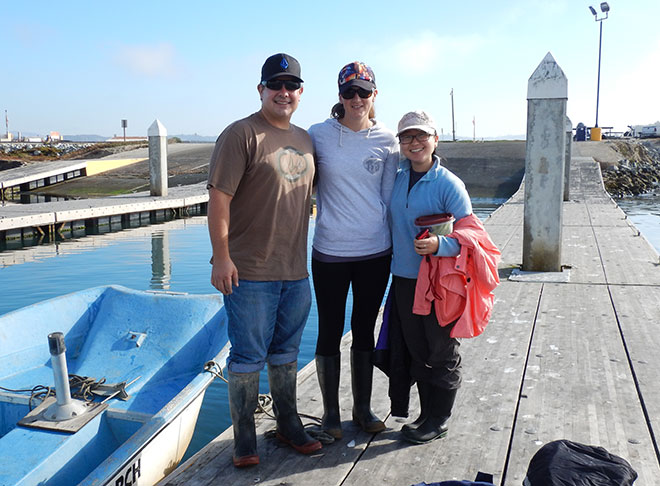
Summer collaborative work in south Sulawesi, Indonesia
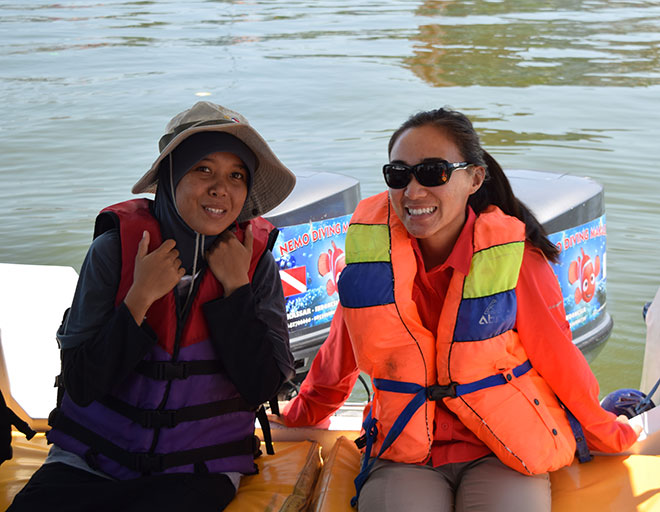
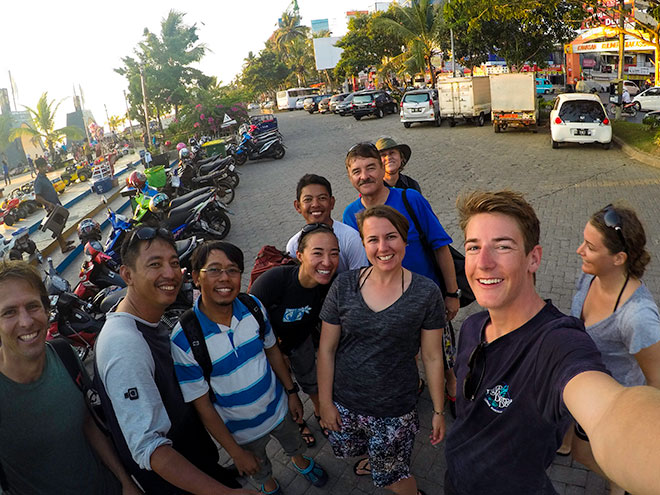
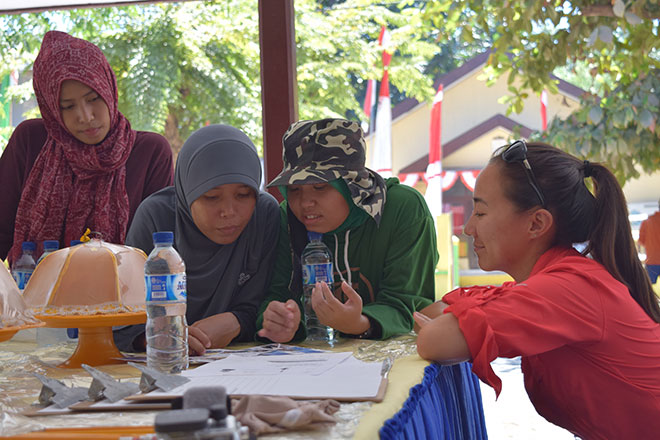
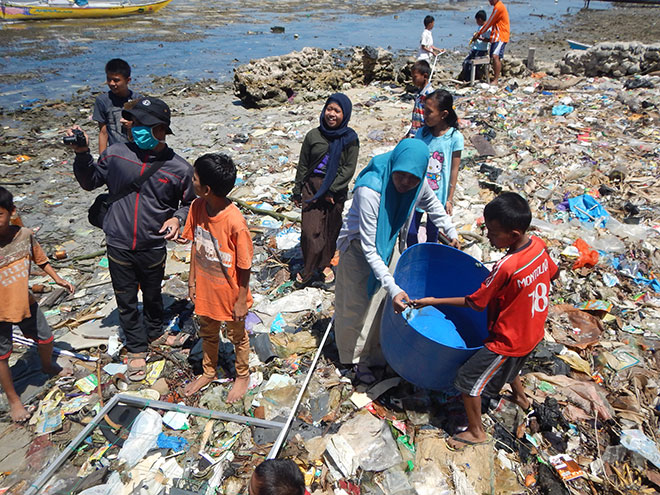
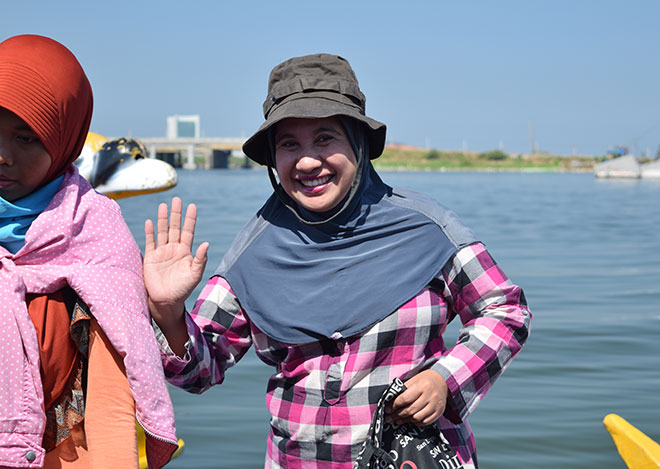
Summer 2014
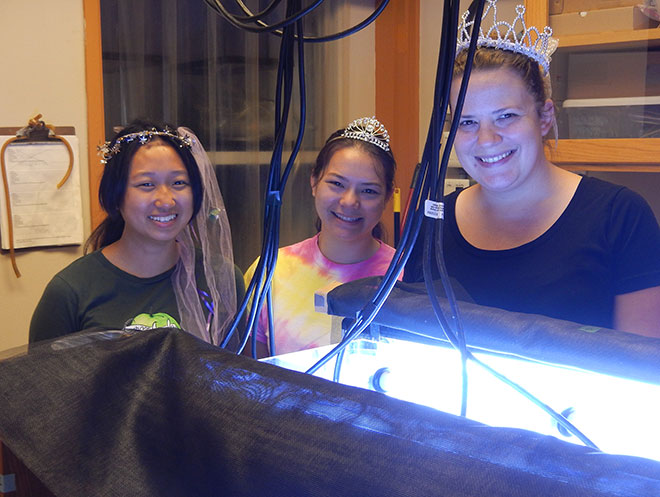
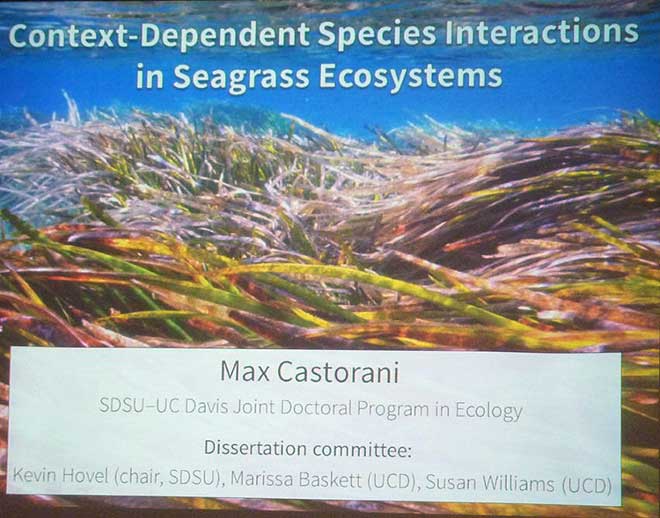
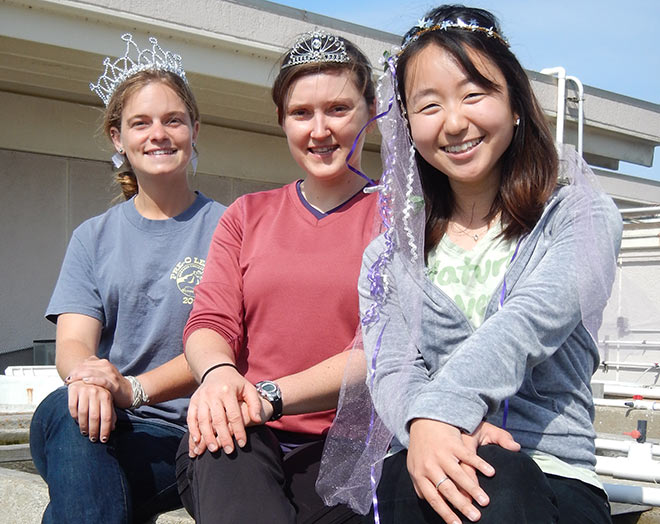
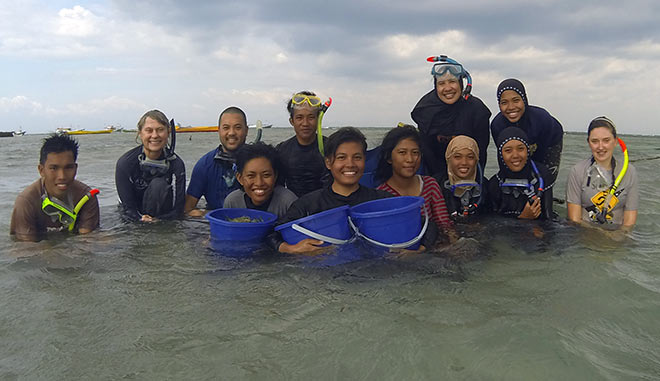
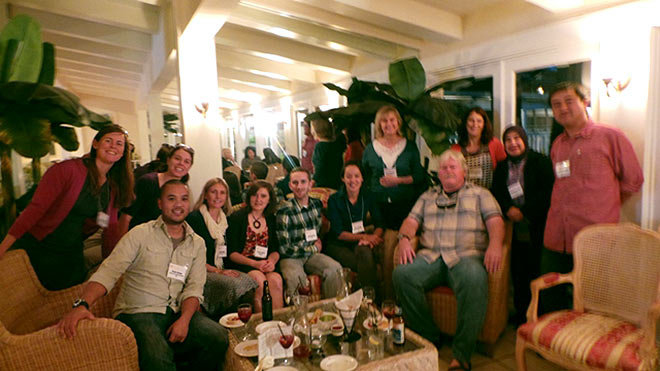
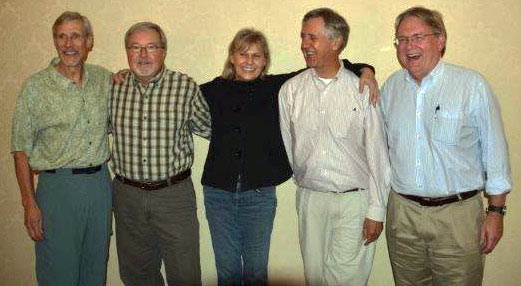
Left to right: Sarah Hameed (BML GK-12 Fellow; Team Indonesia), Brian Cheng (seated, BML GK-12 Fellow, Team Indonesia), Lisa Komoroske (BML GK-12 Fellow), Megan Johnson Cooper (MS, SDSU; CA State Coastal Conservancy), Jessica Abbott (UCD PhD student; Team Indonesia), Max Castorani (UCD-SDSU PhD student), Nicole Travis (Susan's first REU cohort; MS student SFSU), Susan, Dr. Todd Anderson (Hydrolab Aquanaut with Susan, Professor SDSU), Carolyn Lieberman (MS, SDSU; US FIsh & Wildlife Service), Dr. Rohani Ambo-Rappe (Faculty, Hasanuddin University, Sulawesi; Team Indonesia Co-Leader), Dr. Massa Nakaoka (Professor and Director, Akkeshi Marine Laboratory, Hokkaido University, Japan; Susan's sabbatical leave host and colleague)
Former Williams Lab Members
- Grace Ha, Ph.D., Graduate Group in Ecology. Grace is currently investigating the role of coloration in species interactions in eelgrass beds.
- Katie Dubois, Ph.D.
- Max Castorani, Ph.D., UCD-SDSU Graduate Group in Ecology. Max worked on eelgrass-ghost shrimp interactions for his Ph.D. See Castorani et al. 2014 under publications.
- Olivia Turnross, Ph.D. Student, UCD. As an undergraduate, Olivia helped Max on his eelgrass research.
- Emily Jones, Ph.D., UCD-SDSU Graduate Group in Ecology. Emily worked on herbivore effects on seaweeds.
- Jessica Abbott, Ph.D. (2015), UCD Population Biology Graduate Group.
- Dale Trockel, Ph.D., UCD Applied Mathematics.
- Ellie Oldach, undergraduate student
- Josh Gevertz, undergraduate student
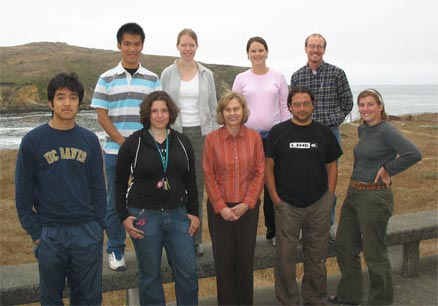
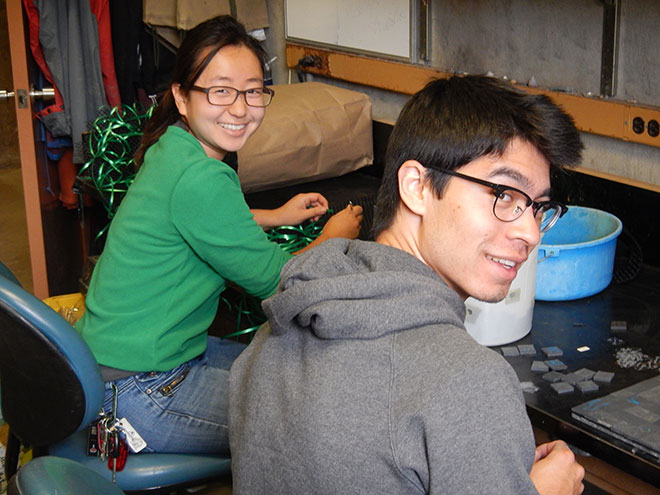
Top row: Terry Fei Fan Ng (U. South Florida), Cascade Sorte (Ph.D. student), Dr. Randall Hughes, Dr. Matt Bracken Bottom row: Eric Fan (undergrad, UCD), Sara Friberg (REU student; New Mexico Institute of Mining & Technology), Susan Williams, Albert Carranza (Research Associate), Amanda Newsom (Ph.D. student) Absent: Laura Rodriguez (in Baja California)
Publications
See complete list of citations.
Williams, S.L., J.M. Abbott, L.K. Reynolds and J.J. Stachowicz. 2018. Marine macrophyte detritus and degradation: the role of intraspecific genetic variation. Estuaries and Coasts: https://doi.org/10.1007/s12237-017-0360-9
Abbott, J.M., R.K. Grosberg, S.L. Williams, and J.J. Stachowicz. 2017. Multiple dimensions of intraspecific diversity affect biomass of eelgrass and its associated community. Ecology 98:3152–3164. doi:10.1002/ecy.2037
Reynolds, L. K., K.M. Chan, E. Huynh, S.L. Williams and J.J. Stachowicz. 2017. Plant genotype identity and diversity interact with mesograzer species diversity to influence detrital consumption in eelgrass meadows. Oikos. doi:10.1111/oik.04471
Hughes, A.R., J.H. Grabowski, H.M. Leslie, S. Scyphers and S.L. Williams. 2017. Inclusion of biodiversity in habitat restoration policy to facilitate ecosystem recovery. Conservation Letters. http://onlinelibrary.wiley.com/doi/10.1111/conl.12419/epdf
Williams, S.L., R. Ambo-Rappe, C. Sur, J.M. Abbott and S.R. Limbong. 2017. Species richness accelerates marine ecosystem restoration in the Coral Triangle. Proceedings of the National Academy of Sciences USA 114:11986-11991. doi:10.1073/pnas.1707962114
Ettinger, C.L., S.L. Williams, J.M. Abbott, J.J. Stachowicz and J.A. Eisen. 2017. Microbiome succession during ammonification in eelgrass bed sediments. PeerJ 5:e3674 https://doi.org/10.7717/peerj.3674
Reynolds, L.K., K. DuBois, J.M. Abbott, S.L. Williams and J.J. Stachowicz. 2016. Response of a habitat-forming marine plant to a simulated warming event is delayed, genotypic specific, and varies with phenology. PLoS ONE 11(6): e0154532. doi 10.1371/journal.pone.0154532
Williams, S.L. 2016. From Sea to Sea. Nature News & Views 530:290-291. doi:10.1038/nature16869
Bracken, M.E.S. and S.L. Williams. 2016. The underappreciated role of life history in mediating the consequences of biodiversity change. Oikos (invited) 126:488-496. doi: 10.1111/oik.03884
Rochman, C.M., A. Tahir, S.L. Williams, D.V. Baxa, R. Lam, J.T. Miller, F.-C. Teh, S. Werorilangi, and S.J. Teh. 2015. Anthropogenic debris in seafood: plastic debris and fibers from textiles in fish and bivalves sold for human consumption. Nature Scientific Reports 5:14340. DOI: 10.1038/srep14340
Grosholz, E.D., R.E. Crafton, R.E. Fontana, J.R. Pasari, S.L. Williams and C.J. Zabin. 2015. Aquaculture as a vector for marine invasions in California. Biological Invasions 17:1471-1484. doi 10.1007/s10530-014-0808-9
Komoroske, L.M., S.O. Hameed, A.I. Szoboszlai, A.J. Newsom and S.L. Williams. 2015. A scientist’s guide to achieving broader impacts through K-12 STEM collaboration. BioScience 65:313-322. doi:10.1093/biosci/biu222
Williams, S.L., R. E. Crafton, R. E. Fontana, E.D. Grosholz, J.R. Pasari and C.J. Zabin. 2015. A vector analysis of marine ornamental species in California. Management of Biological Invasions 6:13-29.
Williams, S.L., N. Janetski, J. Abbott, S. Blankenhorn, B. Cheng, R.E. Crafton, S.O. Hameed, S. Rapi and D. Trockel. 2014. Ornamental marine species culture in the Coral Triangle: seahorse demonstration project in the Spermonde Islands, Sulawesi, Indonesia. Environmental Management 54:1342-1355. doi 10.1007/s00267-014-0343-6
Williams, S.L., J. Abbott, G. Ha and R. Ambo-Rappe. 2014. Juvenile batfish hidden in seagrass. Coral Reefs 33:909. doi 10.1007/s00338-014-1194-6
Burnaford, J.L., K.J. Nielsen and S.L. Williams. 2014. Celestial mechanics affect emersion time and abundance patterns of an ecosystem engineer, the intertidal kelp Saccharina sessilis. Marine Ecology Progress Series 509:127-306. doi:10.3354/meps10876
Castorani, M.C.N., K.A. Hovel, S.L. Williams and M.L. Baskett. 2014. Disturbance facilitates the coexistence of antagonistic ecosystem engineers in California estuaries. Ecology 95:2277-2288. doi: http://dx.doi.org/10.1890/13-1846.1
Newsom, A.J. and S.L. Williams. 2014. Predation and functional responses of Carcinus maenas and Cancer magister in the presence of the introduced cephalaspidean Philine orientalis. Estuaries and Coasts 37:1284-1294. doi 10.1007/s12237-013-9759-0.
Williams, S.L. , I.C. Davidson, J.R. Pasari, G.V. Ashton, J.T. Carlton, R.E. Crafton, R.E. Fontana, E.D. Grosholz, A.W. Miller, G.M. Ruiz and C. J. Zabin. 2013. Managing multiple vectors for marine invasions in an increasingly connected world. BioScience 63:952-966.
Bracken, M.E.S. and S.L. Williams. 2013. Realistic changes in seaweed biodiversity affect multiple ecosystem functions on a rocky shore. Ecology: doi: 10.1890/12-2182.1
Williams, S.L. 2013. A new collaboration for Indonesia’s small islands. Frontiers in Ecology and the Environment 11:274-275.
Williams, S.L., M.E.S. Bracken and E. Jones. 2013. Additive effects of physical stress and herbivores on intertidal seaweed biodiversity. Ecology 94:1089-1101.
Tomas, F., J.M. Abbott, C. Steinberg, M. Balk, S.L. Williams and J.J. Stachowicz. 2011. Plant genotype and nitrogen loading influence seagrass productivity, biochemistry, and plant-herbivore interactions. Ecology 92:1807-1817.
Bracken, M.E.S., E. Jones and S.L. Williams. 2011. Herbivores, tidal elevation, and species richness simultaneously mediate nitrate uptake by seaweed assemblages. Ecology 92:1083-1093.
Sorte, C. J.B., S.L. Williams, and R. A. Zerekecki. 2010. Ocean warming increases threat of invasive species in a marine fouling community. Ecology 91:2198-2204.
Sorte, C. J.B., S.L. Williams, and J.T. Carlton. 2010. Marine range shifts and species introductions: comparative spread rates and community impacts. Global Ecology and Biogeography 19:303-316.
Waycott, M., C.M. Duarte, T.J.B. Carruthers, R.J. Orth, W.C. Dennison, S. Olyarnik, A. Calladine, J.W. Fourqurean, K.L. Heck, Jr., A.R. Hughes, G.A. Kendrick, W.J. Kenworthy, F.T. Short and S.L. Williams. 2009. Accelerating loss of seagrasses across the globe threatens coastal ecosystems. Proceedings of the National Academy of Sciences 106:12377-12381.
Hughes, A.R., J.J. Stachowicz, and S.L. Williams. 2009. Morphological and physiological variation among seagrass (Zostera marina) genotypes. Oecologia 159:725-737.
Dethier, M.N. and S.L. Williams. 2009. Seasonal stresses shift optimal intertidal algal habitats. Marine Biology 156:555-567.
Stewart, H.L., J.P. Fram, D.C. Reed, S.L. Williams, M.A. Brzezinski, S. MacIntyre, B. Gaylord. 2009. Differences in growth, morphology and tissue C and N of Macrocystis pyrifera within and at the outer edge of a giant kelp forest in California, USA. Marine Ecology Progress Series 345:101-112.
Hughes, A.R, S.L. Williams, C.M. Duarte, K.L. Heck, Jr., and M. Waycott. 2009. Associations of concern: declining seagrasses and threatened dependent species. Frontiers in Ecology and the Environment 7:242-246.
Williams, S.L., A. Carranza, J. Kunzelman, S. Datta, and K.M. Kuivila. 2009. Effects of the herbicide diuron on cordgrass (Spartina foliosa) reflectance and photosynthesis parameters. Estuaries and Coasts 32:146-157.
Heck, K.L, Jr., T.J.B. Carruthers, C.M. Duarte, A.R. Hughes, G. Kendrick, R.J. Orth, and S. Williams. 2008. Trophic transfers from seagrass meadows subsidize diverse marine and terrestrial consumers. Ecosystems 11:1198-1210.
Nakaoka, M., M. Matsumasa, T. Toyohara and S.L. Williams. 2008. Animals on marine flowers: does the presence of flowering shoots affect mobile epifaunal assemblage in an eelgrass meadow? Marine Biology 153:589-598.
Bracken, M.E.S., S.E. Friberg, C.A. Gonzalez-Dorantes and S.L. Williams. 2008. Functional consequences of realistic biodiversity changes in a marine ecosystem. Proceedings of the National Academy of Sciences USA 105:924-928.
Fram, J.P., H.L. Stewart, M.A. Brzezinski, B. Gaylord, D.C. Reed, S.L. Williams, S. MacIntyre. 2008. Physical pathways and utilization of nitrate supply to the giant kelp Macrocystis pyrifera. Limnology and Oceanography 53:1589-1603.
Williams, S.L. and E.D. Grosholz. 2008. The invasive species challenge in estuarine and coastal environments: marrying management and science. The H.T. Odum Synthesis Essay (invited). Estuaries and Coasts 31:3-20.
Williams, S.L. 2007. Introduced species in seagrass ecosystems: status and concerns. Journal of Experimental Marine Biology and Ecology 350:89-110. (invited review)
Williams, S.L. and J.E. Smith. 2007. A global review of the distribution, taxonomy, and ecological effects of introduced seaweeds. Annual Review of Ecology, Evolution, and Systematics 38:327-259. (invited review)
Carpenter, R.C. and S.L. Williams. 2007. Mass transfer limitation of photosynthesis of coral reef algal turfs. Online First, DOI 10.1007/s00227-006-0465-3.
Orth, J.J., T.J.B. Carruthers, W.C. Dennison, C.M. Duarte, J.M. Fourqurean, K.L. Heck, Jr., A.R. Hughes, G.A. Kendrick, W.J. Kenworthy, S. Olyarnik, F.T. Short, M. Waycott, and S.L. Williams. 2006. A global crisis for seagrass ecosystems. BioScience 56:987-996.
Lodge, D.M., S. Williams, H. MacIsaac, K. Hayes, B. Leung, S. Reichard, R.N. Mack, P.B. Moyle, M. Smith, D.A. Andow, J.T. Carlton, and A. McMichael. 2006. Biological invasions: recommendations for U.S. policy and management. Ecological Applications 16:2035-2054.
Harley, C., A.R. Hughes, K. Hultgren, B. Miner, C. Sorte, C. Thornber, L. Rodriguez, L. Tomanek, and S. Williams. 2005. The impacts of climate change in coastal marine systems. Ecology Letters 9:228-241.
Williams, S.L., T.E. Ebert and B.J. Allen. 2005. Does the recruitment of a non-native mussel into native eelgrass habitat explain the disjunct adult distributions? Diversity and Distributions 11:409-416.
Williams, S.L. and M.N. Dethier. 2005. High and dry: variation in net photosynthesis by the intertidal seaweed, Fucus gardneri. Ecology 86:2373-2379.
Dethier, M.N., S.L. Williams and A. Freeman. 2005. Seaweeds under stress: manipulated stress and herbivory affect critical life history functions. Ecological Monographs 75:403-418.
Naylor, R., K. Hindar, I. Fleming, M. Mangel, S.L. Williams, J. Volpe, F. Whoriskey, J. Eagles, and D. Kelso. 2005. Fugitive salmon: assessing risks of escaped fish from netpen aquaculture. BioScience 55:427-437.
Hughes, A.R., L.F. Rodriguez, A.J. Bando, and S.L. Williams. 2004. Relative effects of grazers and nutrients on seagrasses: a meta-analysis approach. Marine Ecology Progress Series 282:87-99.
Wright, J.T., S.L. Williams and M.N. Dethier. 2004. No zone is always greener: variation in the performance of Fucus gardneri embryos, juveniles and adults across tidal zone and season. Marine Biology 1145:1061-1073.
Padilla, D.K. and S.L. Williams. 2004. Beyond ballast water: aquarium and ornamental trades as sources of invasive species in aquatic ecosystems. Frontiers in Ecology and the Environment 2:131-138.
Williams, S.L. and S.L. Schroeder. 2004. Eradication of the invasive seaweed Caulerpa taxifolia by chlorine bleach. Marine Ecology Progress Series 272:69-76.
Ebert, T.E. and S.L. Williams. 2003. Rejoinder to Fourqurean et al. Limnology and Oceanography 48: 2074-2075.
Allen, B.J. and S.L. Williams. 2003. Native eelgrass Zostera marina controls growth and reproduction of an invasive mussel through food limitation. Marine Ecology Progress Series 254:57-67.
Johnson, M., S.L. Williams, C.H. Lieberman, and A. Solbak. 2003. Changes in the abundance of the seagrasses Zostera marina L. (eelgrass) and Ruppia maritima L. (widgeongrass) in San Diego, California following an El Niño event. Estuaries 26:106-115.
Haring, R.N., M.N. Dethier and S.L. Williams. 2002. Desiccation facilitates wave-induced mortality of the intertidal alga, Fucus gardneri. Marine Ecology Progress Series 232:75-82.
Williams, S.L. and E.D. Grosholz. 2002. Preliminary reports from the Caulerpa taxifolia invasion in Southern California. Marine Ecology Progress Series 233:307-310.
Ebert, T.A., S.L. Williams, and P. J. Ewanchuk. 2002. Mortality estimates from age distributions: Critique of a method used to study seagrass dynamics. Limnology & Oceanography 47:600-603.
Coleman, F. and S.L. Williams. 2002. Overexploitation of fish ecosystem engineers: implications for continental shelf communities and management. Trends in Ecology and Evolution 17:40-44.
Naylor, R., S.L. Williams, and D.R. Strong. 2001. Aquaculture- a gateway for exotic species. Science 294:1655-1656.
Williams, S.L. 2001. Reduced genetic diversity in eelgrass transplantations affects both individual and population fitness. Ecological Applications 11:1472-1488.
Williams, S.L. and K.L. Heck, Jr. 2001. Seagrass Communities, p. 317-337. In: M. Bertness, S. Gaines, and M. Hay (eds.), Marine Community Ecology. Sinauer Press, Sunderland, MA.
Cheroske, A.G., S.L. Williams and R. C. Carpenter. 2000. Effects of physical and biological disturbances to Hawaiian algal turf communities. Journal of Experimental Marine Biology and Ecology 248:1-34.
Reusch, T.H.B. and S.L. Williams. 1999. Macrophyte canopy structure and the success of an invasive marine bivalve. Oikos 84:398-416.