

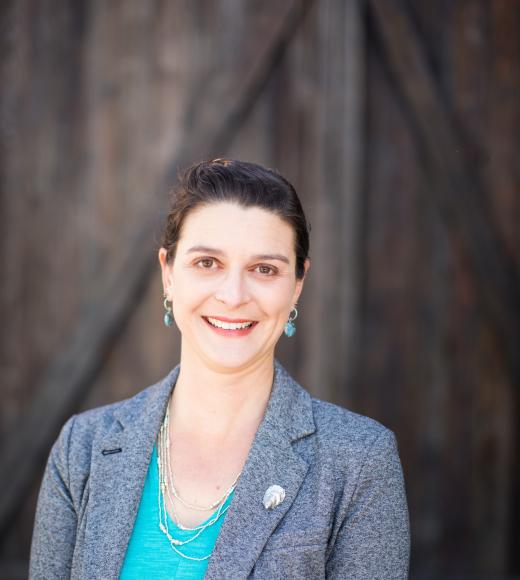
Tessa Hill
University of California, Davis – Department of Geology
Professor, Bodega Marine Laboratory
Bodega Marine Laboratory
P.O. Box 247
Bodega Bay, CA 94923
- About
CV/Publications [PDF]
Recent Hill Laboratory work in the news:
- July 12, 2012 KWMR Radio Podcast: At Hog Island Oyster Company, Bay Area Teachers Get Real Life Examples of the Effects of Ocean Acidification
- November 2, 2009 KWMR Radio Podcast: Using Deep Sea Corals to Study the Environment
- August 28, 2006 Science: Marine Methane Heats Things Up
- August 29, 2006 National Geographic News: Global Warming Feedback Loop Caused by Methane, Scientists Say

Bodega Ocean Acidification Research (BOAR) in the News:
July 18, 2011 KQED Radio: Climate Change Threatens California Mussels
July 18, 2011 The Orange County Register: California mussels: 1st warming casualty?
July 15, 2011 KQED News ClimateWatch: Study: Climate Change Muscling in on Mussels
July 14, 2011 UC Davis News and Information: Acid oceans could hit California mussels
July 6, 2010 KGO-TV/ABC News: Oysters could hold key to ocean acidification.
May 22, 2010 KNTV/NBC News: BML researchers study the effects of ocean acidification on Tomales Bay oysters
April 22, 2010 MSNBC.com: Acidic oceans worsening, experts warn - CO2 impact coming faster than seas can adapt, they say
April 19, 2010 National Science Foundation News: On 'Earth Week', World Is No Longer Our Oyster - Acidifying oceans dramatically stunt growth of already threatened shellfish
Research Interests:
Recent (late Quaternary to modern) environmental change in the marine environment, utilizing the geochemistry of microfossils and corals to understand:
- rates and magnitude of climate change,
- response and adaptation of marine species to environmental change
- role of methane emissions in climate change and marine geological processes
- impact of climate change on carbon cycling and oceanic anoxia
- connections between climate change in marine and terrestrial environments
- anthropogenic impacts on the ocean system, including ocean acidification and anoxia
Research utilizes several proxies in the paleoceanographic record as indicators of temperature and environmental change, such as:
- stable isotopes (δ180, δ13C. δ15N)
- trace elements (Mg/Ca, Sr/Ca, Cd/Ca)
- radiocarbon
- foraminiferal species assemblages
For additional information see Research tab, above.
L-R: Sarah Myhre, Tessa Hill and Sarah Flores enjoying sediment coring aboard the R/V Melville, 2008
Hill lab "family" 2008: Clockwise around Tessa and Mac: Sarah Myhre, Ph.D. student, Kari McLaughlin, REU student, Sverre Leroy, REU student, Chris Myrvold, Ph.D. student, Bart Critser, M.S. student. (missing Sarah Flores, M.S. student, and Anne Fisher, REU student). - Research
Ongoing Research
Bamboo corals as records of climate change in the ocean's interior
Left: Pieces of a bamboo coral skeleton, showing calcite sections with organic nodes. Scale bar is 5cm.
This research utilizes bamboo corals, which reside at intermediate depths (250 to 2500m) along the California margin as records of the temperature, geochemistry, and ventilation history of north Pacific intermediate waters. This research project is in collaboration with H. Spero (UC Davis) and investigators at the Monterey Bay Aquarium Research Institute (MBARI).
Right: cross-sectional view of calcite skeleton of bamboo coral, showing radial growth bands.Bamboo corals have a skeleton that is composed of both calcite sections and organic nodes. Bamboo corals produce visible alternating bands in their calcium carbonate skeleton. The frequency of the banding is hypothesized to be annual or sub-annual (Roark et al., 2005). Bamboo corals can live for hundred of years, preserving a high-resolution record of environmental conditions at intermediate depths. Despite the geographic extent and importance of these corals as part of the deep-sea ecosystem, very little is understood about their biology, geochemistry, and biogeography.
For more information, please visit the website of our recent MBARI/NOAA cruise,
Recent abstracts from this research:
This project is supported by the National Science Foundation and NOAA's Undersea Research Program.
Please learn more about the deep sea corals in our collection and our ongoing research by visiting the Deep Sea Coral page: CURRENTLY IN DEVELOPMENT
Past and present pH variability: Impacts on larval invertebrates
Left, Bodega Ocean Acidification Research: Experimental setup for culturing organisms in controlled CO2 and pH environments. Pictured: Dr. Eric Sanford, Annaliese Hettinger (Ph.D student) and Jennifer Hoey (REU student)Climate change impacts due to the release of anthropogenic carbon dioxide (CO2), including ocean and climate warming and changes in the hydrological cycle, have received intense international attention from scientists and policy-makers for several decades (IPCC, 2007 and references therein). As anthropogenic CO2 is added to the atmosphere, a portion of the CO2 is absorbed by the ocean, and this process leads to a decline in ocean pH. However, the potential consequences of ocean acidification have only recently received increased attention (Caldeira and Wickett, 2003; Feely et al., 2005; Orr, et al., 2005), despite predictions that reductions in ocean pH are likely to accelerate in the future. Improving our understanding the impact of changes in ocean pH on the carbonate saturation state of seawater and on marine organisms and ecosystems is increasingly urgent as many of them form shells or internal skeletons made of calcium carbonate.
Our interdisciplinary research group (Gaylord, Sanford, Hill and Russell) aims to investigate the impacts of ocean acidification on coastal California environments. A fundamental question in understanding the response of organisms to shifts in pH includes investigating both natural and anthropogenic variability in the pH and carbonate system. To that end, our research project includes:
- Culturing of key species in the laboratory under reduced pH conditions
- Monitoring modern pH variability on the Northern California coast using pH sensors and oceanographic transects
- Reconstructing past pH variability utilizing geochemical proxies for pH in marine carbonates
This project is supported by the National Science Foundation and UC MRPI program.
For more information, please visit the Bodega Ocean Acidification Research (BOAR) webpage, and view the following conference abstracts:
Records of anthropogenic environmental change from coastal environments
Only limited data exist as a basis to understand the potential consequences of ocean acidification on organisms and ecosystems in temperate coastal environments. This research proposes to addresses a critical step towards understanding the influence of changes in pH on coastal environments by quantifying the natural and anthropogenic variability in ocean pH and constraining the components that contribute to change in pH of coastal California waters, including upwelling, coastal runoff, and atmospheric CO2 flux. This is a collaborative project with Ann Russell (UC Davis), Adina Paytan (UC Santa Cruz), Dorothy Pak & James Kennett (UC Santa Barbara).
The California coast resides in a critical region for natural pH variability. This is due to the influence of a strong but variable upwelling system that brings nutrient-rich, low-pH water to the surface. Furthermore, changes in terrestrial runoff can significantly alter coastal ocean and estuarine pH, through direct influence on the natural buffering capacity of seawater. Thus it is important to determine the natural variability of pH over longer timescales (hundreds to thousands of years) to provide historic perspective on the ongoing and expected future changes resulting from increased anthropogenic CO2 inputs, and to determine the critical threshold at which organisms may be negatively affected. This research is expected to provide an important integrated paleoceanographic and modern perspective on the response of nearshore ecosystems to natural and anthropogenic environmental variability.
We are engaged in an integrative study of the recent geologic history (Holocene; past 11,000 years to present) of upwelling, hydrology and pH change on the California margin, via high-resolution sedimentary records at three coastal California sites. This project has three major objectives:
- Constrain the history of natural and anthropogenic variability in pH along the California margin;
- Understand the relative roles of atmospheric CO2, upwelling and freshwater runoff in controlling surface water pH, and
- Quantify past and predict future biological response to pH changes via indicators such as species shifts and organic matter input to coastal sediment
Please view these recent abstracts from this project:
Causes and consequences of the Storegga submarine landslide: Was methane hydrate involved?
The Storegga slide (offshore Norway) is the largest known submarine slide on a continental margin, affecting an area of ~95,000 km 2 and associated with tsunami deposits in Scotland, Norway, and Iceland (Haflidason et al., 2005; Bondevik et al., 2005). The Storegga landslide occurred in the early Holocene (~8.1 ka) and is hypothesized to be associated with the disturbance of gas hydrates on the Norwegian continental margin during deglacial warming and sea level rise. I am investigating the sedimentary history of the Storegga landslide and associated implications for gas hydrate stability, with collaborators C. Paull (MBARI), B. Ussler (MBARI) and S. Holbrook (U Wyoming).
Right, Analyses of benthic foraminiferal assemblages from the Storegga slide, on board the R/V Knorr,
September 2004.This project is supported by the American Chemical Society Petroleum Research Fund.
For more information on this project, please check these recent abstracts:
- Teaching
Department of Geology and Bodega Marine Laboratory
Courses:
- GEL 16, The Oceans
- GEL/ESP 150C, Biological Oceanography
- GEL/ESP 116, Oceanography
- GEL 228, Topics in Paleoceanography
Current offerings in the Dept of Geology
Complete list of Dept of Geology course offerings
Please contact Tessa Hill for more information!
- Publications
CV/Publications [PDF]
- Lab
The Hill Lab
Current members of the Hill Lab:
- Jessica Hosfelt (Junior Specialist)
- Sarah Flores, M.S. student
- Sarah Myhre, Ph.D. student
- Sarah White, M.S. student
- Michèle LaVigne, Ph.D., Postdoctoral Scholar [CV - PDF]
Hill lab Summer 2009 L to R: Tessa Hill, Lisa Jacobs, Shane Downing (REU student, Allegheny College), Crystal Replogle, Sarah Flores, Chris Myrvold (missing Sarah Myhre and Sarah White).
Hill lab Summer 2008 L to R: Tessa Hill, Chris Myrvold, Bart Critser, Kari McLaughlin, Anne Fisher, Sarah Myhre, Sverre Leroy (missing: Sarah Flores).
Hill Lab, Summer 2007 (top row, L to R): Clarity Guerra, Mt. Holyoke undergraduate; Bart Critser, M.S. student, Christopher Myrvold, M.S. student, Jessica Bean, Ph.D. student. (bottom row, L to R): Sarah Flores, UCD under-graduate; Anne Fisher, University of the Pacific undergraduate.
From left to right: Steve Macallelo, T. Hill, Karen Chan, Johnfranco Saraceno at lab graduation party, June 2006.Former students:
- Chris Myrvold, M.S. student 2006-2009
- Shane Downing, REU student 2009 (Allegheny College)
- Bart Critser, M.S. Student 2006-2008.
- Sverre LeRoy, REU student 2008 (Mills College)
- Kari McLaughlin, REU student 2008 (University of the Pacific)
- Anne Fisher, REU student 2008 (University of the Pacific)
- Clarity Guerra, REU student, 2007 (Mt. Holyoke)
- Stephanie Ho, REU student, 2006 (UC Irvine)
- Karen Chan, UCD senior thesis student, 2005-2006
- Steven Macalello, UCD senior thesis student, 2005-2006
- Johnfranco Saraceno, UCD senior thesis student, 2005-2006
Stephanie Ho, Research Experience for Undergraduates student, summer 2006: Shallow water foraminifera are fun!Please contact Tessa Hill for more information.
- New Students
Prospective Graduate Students
I am seeking motivated, creative and hardworking graduate students interested in any of our ongoing research projects or a project of their own design. Students interested in applying for graduate study should contact me personally, and:
- Go to the UCD Geology Department or the Graduate Group in Ecology websites for application information
- Learn about ongoing research in the Geology department on Paleoclimate and Paleoenvironments, Paleobiology, and Geochemistry
- Refer to the following websites for information on graduate fellowships:
- National Science Foundation Graduate Fellowships
- EPA STAR Fellowships For Graduate Environmental Study
- Hertz Foundation Graduate Fellowships
- Fastweb Scholarship Search
- UC Davis Graduate Student Financial Aid
- Evolving Earth
- Robert and Patricia Switzer Foundation
- Ford Foundation Fellowships
- Geological Society of America
- Coastal Environmental Quality Initiative (UC)
Other good links for graduate students:

Please contact Tessa Hill for more information!
CV/Publications [PDF]
Recent Hill Laboratory work in the news:
- July 12, 2012 KWMR Radio Podcast: At Hog Island Oyster Company, Bay Area Teachers Get Real Life Examples of the Effects of Ocean Acidification
- November 2, 2009 KWMR Radio Podcast: Using Deep Sea Corals to Study the Environment
- August 28, 2006 Science: Marine Methane Heats Things Up
- August 29, 2006 National Geographic News: Global Warming Feedback Loop Caused by Methane, Scientists Say

Bodega Ocean Acidification Research (BOAR) in the News:
July 18, 2011 KQED Radio: Climate Change Threatens California Mussels
July 18, 2011 The Orange County Register: California mussels: 1st warming casualty?
July 15, 2011 KQED News ClimateWatch: Study: Climate Change Muscling in on Mussels
July 14, 2011 UC Davis News and Information: Acid oceans could hit California mussels
July 6, 2010 KGO-TV/ABC News: Oysters could hold key to ocean acidification.
May 22, 2010 KNTV/NBC News: BML researchers study the effects of ocean acidification on Tomales Bay oysters
April 22, 2010 MSNBC.com: Acidic oceans worsening, experts warn - CO2 impact coming faster than seas can adapt, they say
April 19, 2010 National Science Foundation News: On 'Earth Week', World Is No Longer Our Oyster - Acidifying oceans dramatically stunt growth of already threatened shellfish
Research Interests:
Recent (late Quaternary to modern) environmental change in the marine environment, utilizing the geochemistry of microfossils and corals to understand:
- rates and magnitude of climate change,
- response and adaptation of marine species to environmental change
- role of methane emissions in climate change and marine geological processes
- impact of climate change on carbon cycling and oceanic anoxia
- connections between climate change in marine and terrestrial environments
- anthropogenic impacts on the ocean system, including ocean acidification and anoxia
Research utilizes several proxies in the paleoceanographic record as indicators of temperature and environmental change, such as:
- stable isotopes (δ180, δ13C. δ15N)
- trace elements (Mg/Ca, Sr/Ca, Cd/Ca)
- radiocarbon
- foraminiferal species assemblages
For additional information see Research tab, above.
L-R: Sarah Myhre, Tessa Hill and Sarah Flores enjoying sediment coring aboard the R/V Melville, 2008
Hill lab "family" 2008: Clockwise around Tessa and Mac: Sarah Myhre, Ph.D. student, Kari McLaughlin, REU student, Sverre Leroy, REU student, Chris Myrvold, Ph.D. student, Bart Critser, M.S. student. (missing Sarah Flores, M.S. student, and Anne Fisher, REU student).


